White-label video production for agencies: say yes to every brief
Agency Partners·9 min read
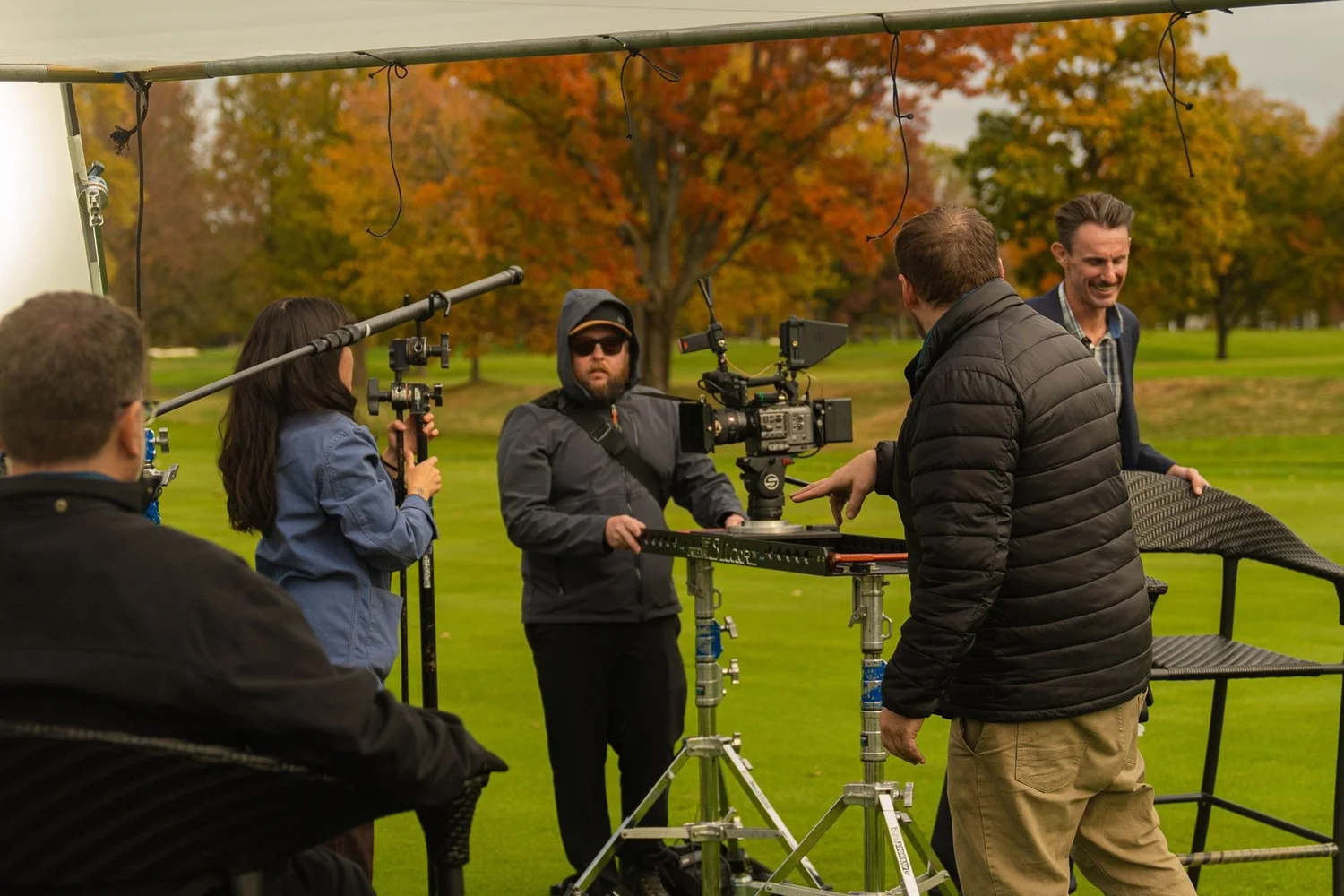
The brief lands on a Thursday. Your client wants a jobsite film, a drone reveal and a stack of vertical cutdowns by the end of the month, your editor is already buried, and a full-time shooter hired for one busy quarter would wreck your utilization for the other three. That’s the gap white-label video production fills, and here’s how it works when it’s done right, producer to producer, from the first call to the final file.
Why agencies partner instead of hiring
Your clients want video, and they want it inside the same retainer as everything else. Demand isn’t the problem.
The problem is staffing it. A full-time video hire looks smart in the month you have back-to-back shoots and painful in the month you have none. Idle salary drags utilization down. One overbooked shooter drags every timeline down with it. Agency owners have noticed: Promethean Research’s 2025 industry report found a “significant uptick in the use of contractors across most agency sizes … to maintain capacity levels while managing utilization rates” (Promethean Research, 2025). Brands are doing the same thing. Around a quarter of companies also outsource video to freelancers or agencies (Wistia, 2026).
Outsourced video production flips the model. You sell the video, own the strategy and keep the relationship. The crew, the gear and the edit show up when the work is real and disappear when it isn’t. No camera package to depreciate, no editor on the bench, and no awkward “we don’t really do video” while your client walks that line item to another shop.
What white-label video production actually means
“White-label” gets used loosely. On a real project, it should mean five specific things.
- Your name on the work. The finished video goes to your client as your agency’s work. No production company credit sneaking into the end card.
- Your client relationship. You run the meetings, own the email thread and present the cut. The partner works behind the curtain and never pitches your client on the side.
- An NDA, if you want one. Your client list and your strategy stay yours. We’re happy to sign one.
- A crew that shows up as your team. White-label on request means we arrive as part of your agency, not as the vendor you hired.
- One point of contact. You deal with me, start to finish. Not a project manager, then an editor, then somebody from a Slack thread you’ve never met.
That’s the whole idea behind our white-label agency partner program. Your client. Your call.
The best white-label partner is the one your client never has to think about.
Three ways to plug in a production partner
Not every brief needs the same kind of help. Match the plug-in to what your team already has in-house.
Production days
You bring the brief, the creative and the client. We bring camera, audio and drone. A production day is a single videographer at one location, with aerials flown by an FAA Part 107 certified pilot. It’s the right call when you have an editor who just needs clean footage coming back on time.
Post
We cut to your brief and your client’s brand, on your footage or ours, with custom thumbnails and captions on every finished video. Perfect for the agency sitting on a drive of raw footage nobody has had a free afternoon to touch.
Finished videos
Hand off the whole thing. Pick a Project Recap (up to 90 seconds), a Testimonial (45 to 90 seconds) or a Brand Feature (2 to 3 minutes plus four 30-second reels). For clients who need a steady stream, a monthly program puts us on their active sites for 1, 2 or 4 shoots a month. You get finished files. Your client gets fresh content every month, under your name. The full menu is on our video production partner page for agencies.
How a white-label project runs, start to finish
Here’s the timeline, no fine print. Build your client’s schedule on it.
- Brief or a 20-minute call. Send the brief, or get on a 20-minute call and walk me through it. I read every message myself and reply within one business day.
- Fixed quote within a week. You get a fixed quote within a week of our call, so your client estimate sits on a number that won’t move.
- The shoot. We show up as part of your team. On jobsites, we work around the crews, safety briefings and timelines.
- First cut within 20 business days of the last shoot. Need it faster? Rush is possible. Tell us the deadline up front, not the week it’s due.
- One round of revisions per deliverable. Merge your notes and your client’s into one clean pass. Need more rounds? We quote them before we start, never after.
- Delivery. Final files with captions and custom thumbnails, ready to go out under your name.
We have partnered with Sean and Loud Visual Media on several video projects for our clients. He always delivers as promised, on schedule and with budget.
Adam McIndoe, Google review
Specialties that make you look good with niche clients
A generalist shooter is fine for a talking head in a conference room. Niche clients are different. They can spot an outsider from across the parking lot, and they judge your agency by who you send.
Construction jobsites
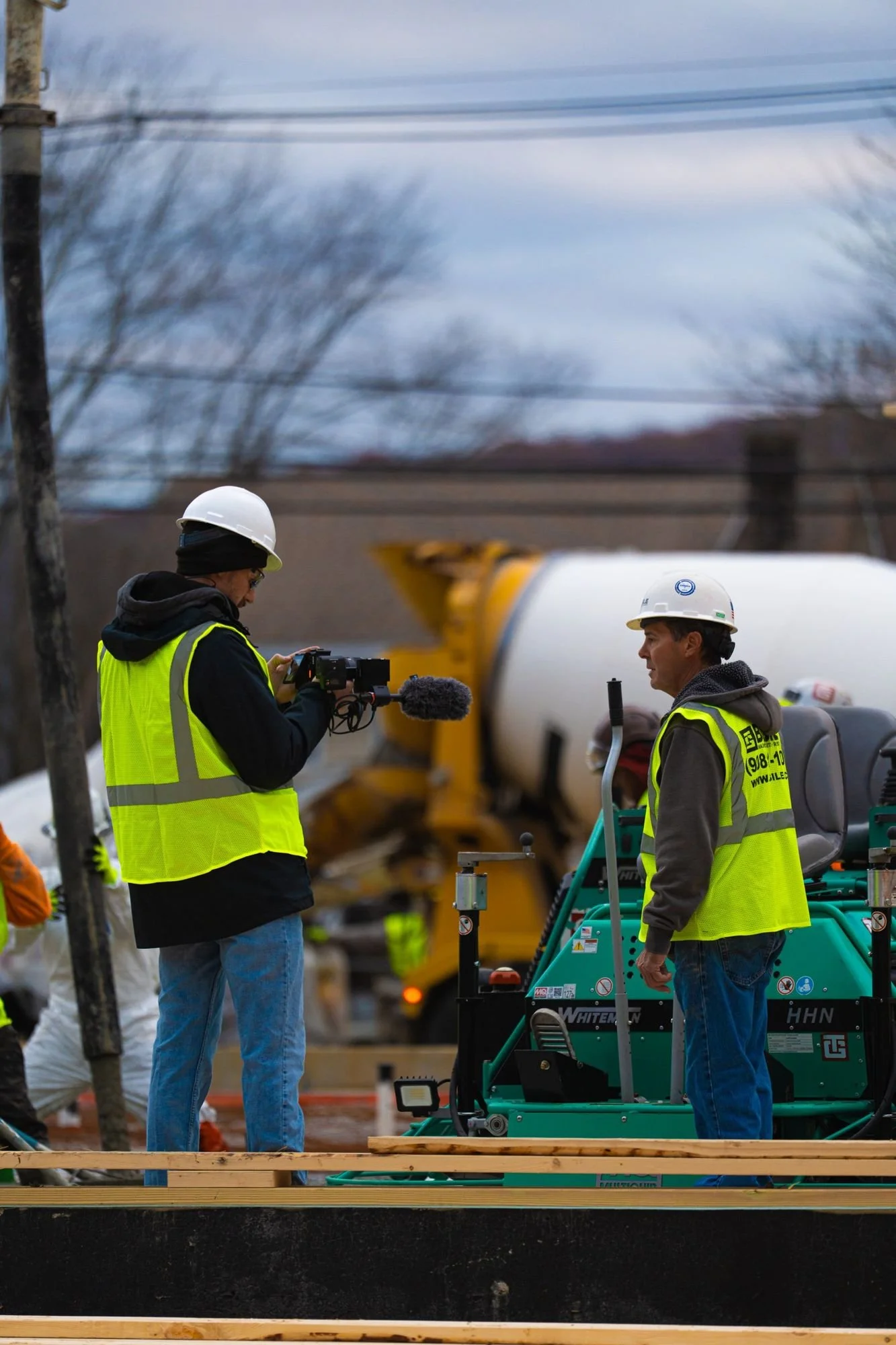
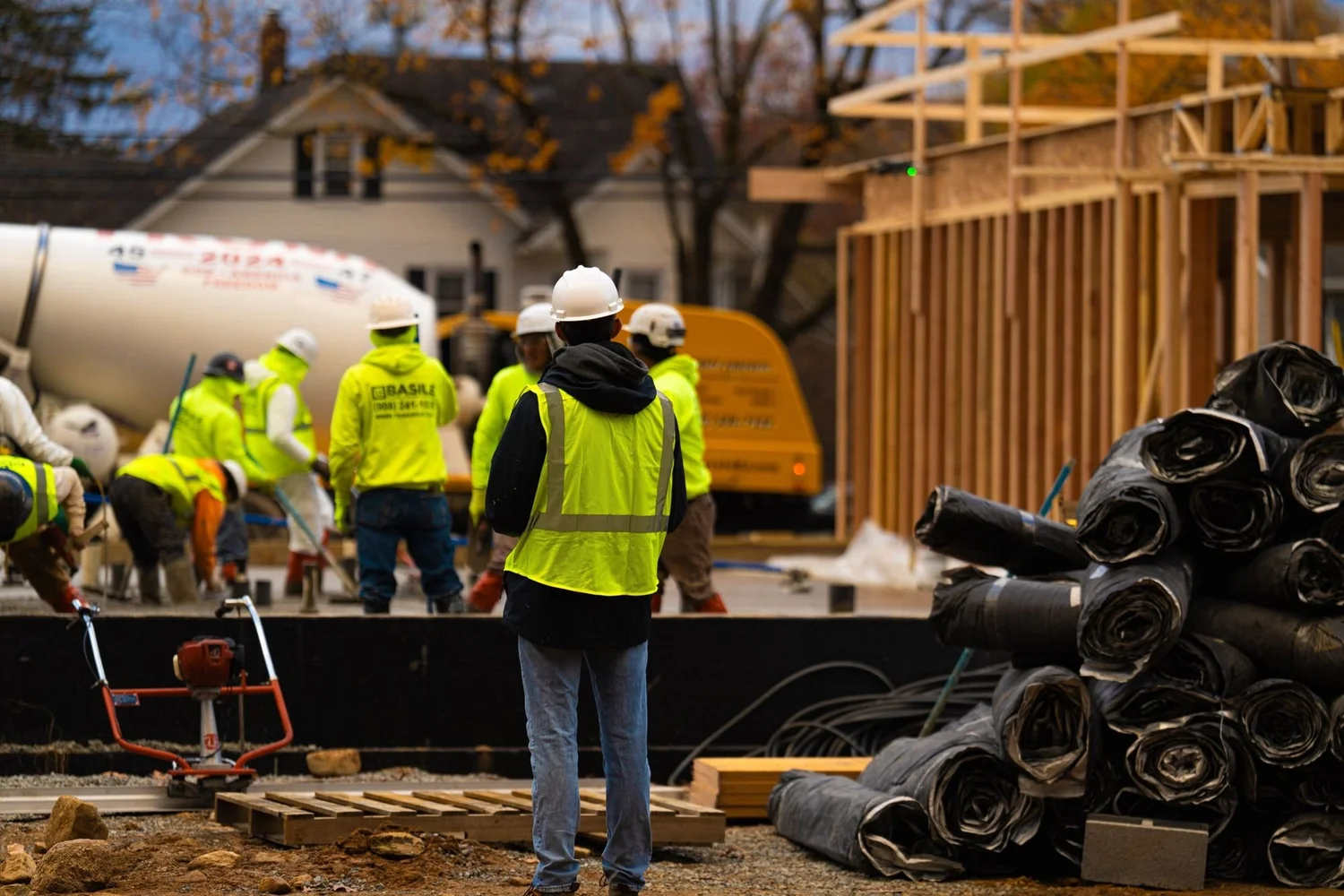
I’m OSHA-30 certified, so I walk onto your client’s site ready for the safety briefing, not asking where the hard hats are. We work around crews, safety briefings and timelines, and we know what a Project Recap has to show to help a contractor win the next job: the crew, the craftsmanship and the scale of the build.
Aerials
I’m also an FAA Part 107 certified drone pilot, and that matters. Commercial drone work falls under 14 CFR Part 107, which requires a remote pilot certificate, visual line of sight and ATC authorization before flying in Class B, C or D airspace or a Class E surface area. LAANC can provide near-real-time authorization at or below 400 feet in controlled airspace. Confirm the airspace for every site on the FAA’s UAS Facility Maps before anyone promises your client a flyover. We go deeper in our guide to construction drone video rules and airspace in New Jersey. This is general information, not legal advice.
Private clubs
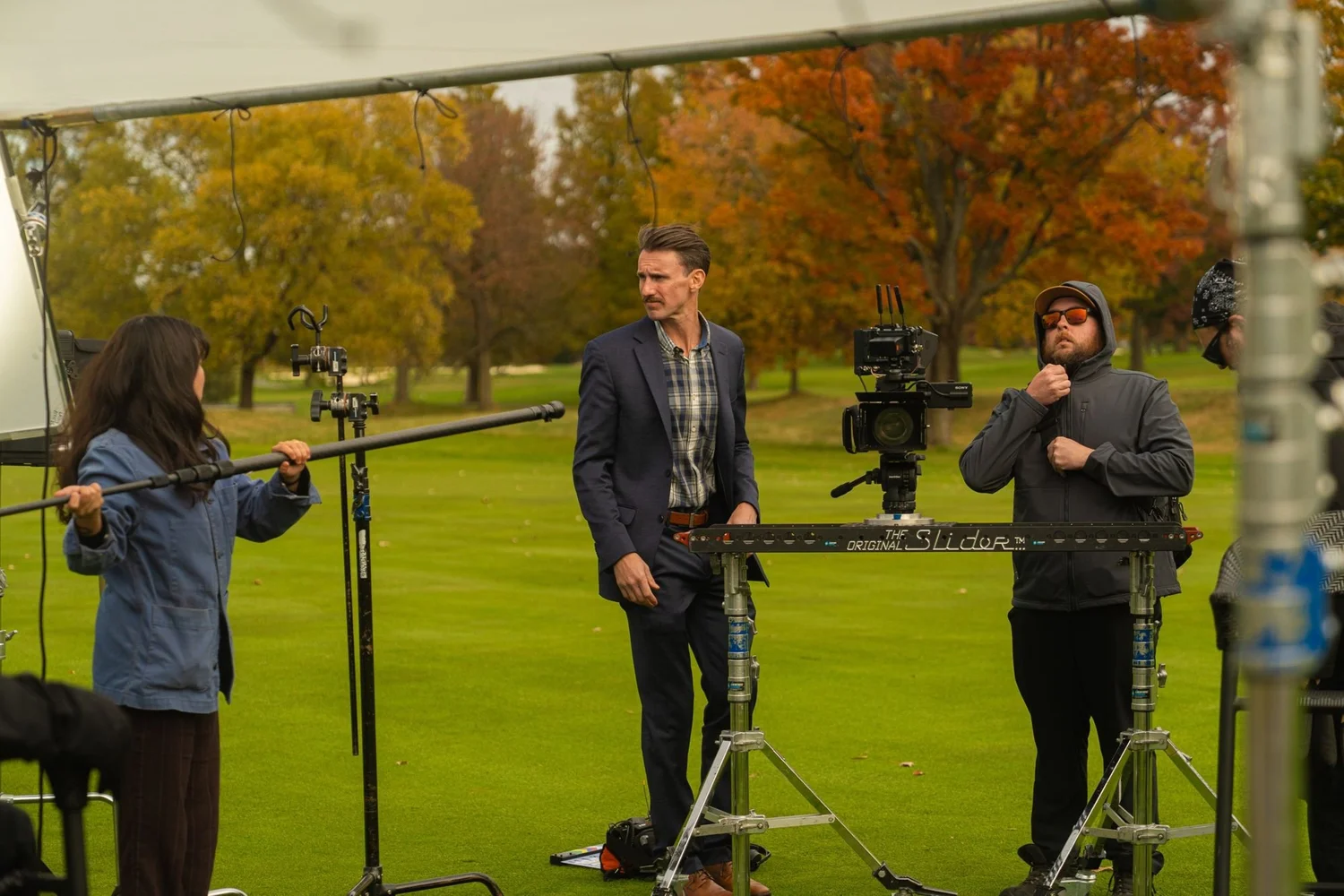
Clubs are the opposite of a jobsite: quiet, traditional and protective of their members. We made “A Legacy on the Green,” the Prestige Film for Upper Montclair Country Club, told by its members and staff, and we’ve filmed for Spring Lake Golf Club. We coach every interview, and we only share a club’s film publicly with the club’s permission. If your agency runs a club account, that discretion is half the job. See it next to our TG Basile and Shore Systems Group films in our construction and club work.
Scaling up when one shooter isn’t enough
A production day is one videographer at one location, and that covers more briefs than you’d think. It doesn’t cover a multi-camera executive interview lit like a feature, or a launch film that needs animated titles and data.
When the brief outgrows a single shooter, we bring in a full crew through our partners: a sound mixer, a gaffer, a grip and a second camera. Motion graphics come through our design partners. Everything is quoted per project, so you know the number before you pitch it.
The other way to scale is time. Short-form video delivers the highest ROI of any format, with 48.6% of marketers ranking it in their top three (HubSpot, 2026). Clients who want that steady drip are a fit for a monthly program: recaps, 30-second highlights and short pieces on recruitment, timelapse, testimonials or a skill or service focus, shot on a set rhythm and cut under your agency’s name. That’s how one project turns into a retainer.
Red flags when you vet a video production partner
You’re about to hand this person your client. Check for these first. Any one of them is a reason to keep looking.
- No fixed quote. “Let’s see how the day goes” is how margin disappears. Get a number before the shoot hits the calendar.
- A vague revision policy. If nobody can tell you what’s included, you’ll find out mid-project.
- A rotating cast of contacts. You want one person who knows the project cold, not a ticket queue.
- Hesitation on the NDA. The hesitation is your answer.
- Their name on your client’s work. Posting your client’s project without clearance, or slipping their own credit into the edit, isn’t white-label.
- Side-door requests. A partner who wants your client’s direct line “to save time” is building their own pipeline.
- No credentials for the environment. Jobsites call for safety training like OSHA-30. Aerials call for a Part 107 remote pilot certificate. Ask to see both.
- No date for the first cut. A partner who can’t name one can’t protect your client’s launch.
If a partner clears all of that, test them with a real brief. Our video production brief checklist for agencies covers everything a partner needs to quote it right the first time. Then let them carry the gear: your client gets a killer film, and your agency gets the credit.
White-label video production FAQ
What is white-label video production?
White-label video production is when an agency hires an outside crew to shoot, edit or fully produce video that goes to the client under the agency’s name. The agency keeps the client relationship and the creative direction, and the partner handles production behind the scenes. Done right, the client just sees great work from their agency.
How much does white-label video production cost?
It depends on scope: how many shoot days, locations and deliverables, and whether the job needs a full crew, drone or motion graphics. Send the brief or book a 20-minute call. You get a fixed quote within a week of that call, so you can build your client estimate on a number that won’t change.
Will my client know we used an outside production partner?
Only if you tell them. White-label is on request: we show up as part of your team, you stay the point of contact with your client, and we’re happy to sign an NDA. The finished files go out under your name.
How long does a white-label video take to deliver?
Our first cut lands within 20 business days of the last shoot day, followed by one round of revisions per deliverable. Additional rounds are quoted before we start. Rush is possible, so tell us the deadline when you send the brief.
Can an agency video production partner handle jobsites and drone work?
It should, if it holds the right credentials. I’m OSHA-30 certified and an FAA Part 107 certified drone pilot, and we film across New Jersey, New York and Pennsylvania and travel anywhere. For any drone shoot, confirm airspace for each site on the FAA’s UAS Facility Maps and through LAANC before promising your client aerials.
Sources
- Wyzowl, Video Marketing Statistics 2026, 2026
- Promethean Research, 2025 Digital Agency Industry Report, 2025
- Wistia, 2026 State of Video, 2026
- HubSpot, 2026 State of Marketing, 2026
- eCFR, 14 CFR Part 107: Small Unmanned Aircraft Systems (accessed 2026)
- FAA, Low Altitude Authorization and Notification Capability (LAANC) (accessed 2026)
- FAA, UAS Facility Maps (accessed 2026)