Construction marketing videos: how contractors use video to win bids
Construction & Development·9 min read
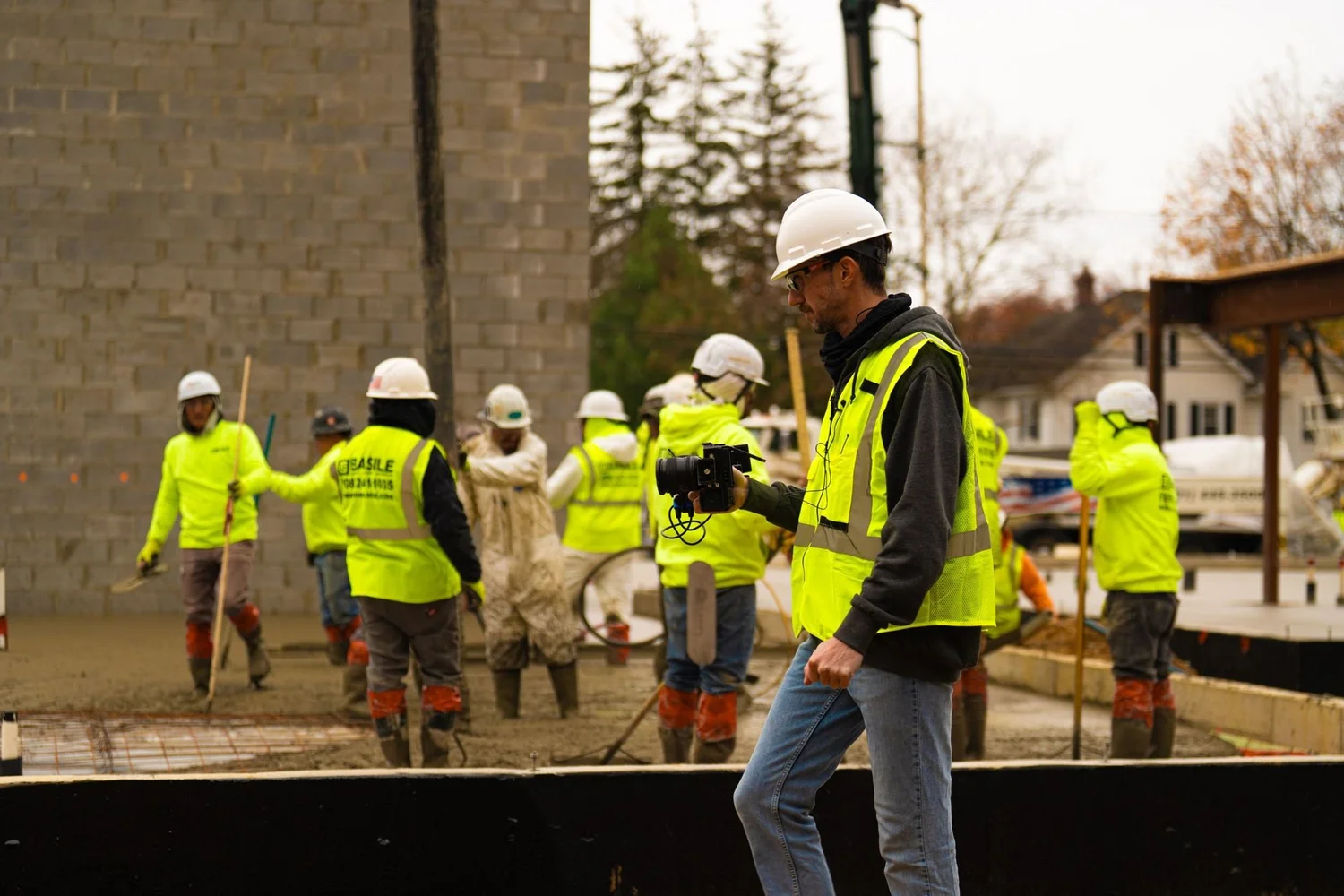
You’re tired of using iPhone photos to pitch million-dollar projects. The owners flipping through your proposal can tell. Here’s the construction marketing video lineup that actually moves a bid or a relationship: what each video is, what goes in it, where it goes and how to tell if it’s working.
Why a construction marketing video beats a folder of site photos
Photos show a finished product. Video shows how you got there: the crew, the equipment, the sequencing, the people an owner is about to trust with their money for the life of the job.
Owners and architects aren’t just buying concrete and steel. They’re buying certainty. They want to see that you’ve done this before, that your sites are organized and that your people know what they’re doing. A still of a finished wall can’t show any of that. Ninety seconds of footage can.
The wider numbers point the same way. Wyzowl’s 2026 research found 85% of video marketers say video has helped them generate leads (Wyzowl, 2026). And in AEC specifically, Hinge’s 2026 High Growth Study found the median marketing budget of high-growth firms was 10% of revenue, versus 5% for the rest (Hinge, 2026). The firms pulling ahead aren’t treating marketing as an afterthought.
An iPhone photo shows what you built. Video shows how you build.
Here’s what that looks like in practice: five kinds of video for construction companies, in the order I’d make them.
The Project Recap: proof for the bid package
If you make one video, make this one. A Project Recap takes a finished job from cleared site to ribbon-cutting in up to 90 seconds. It answers the owner’s first question before they ask it: have you built something like this?
Where a recap earns its keep:
- Linked in the qualifications section of your bid package, right next to the project sheet it proves.
- Played at the top of a shortlist interview, before anyone opens a slide deck.
- Sent after a site walk or owner meeting as a follow-up that isn’t another PDF.
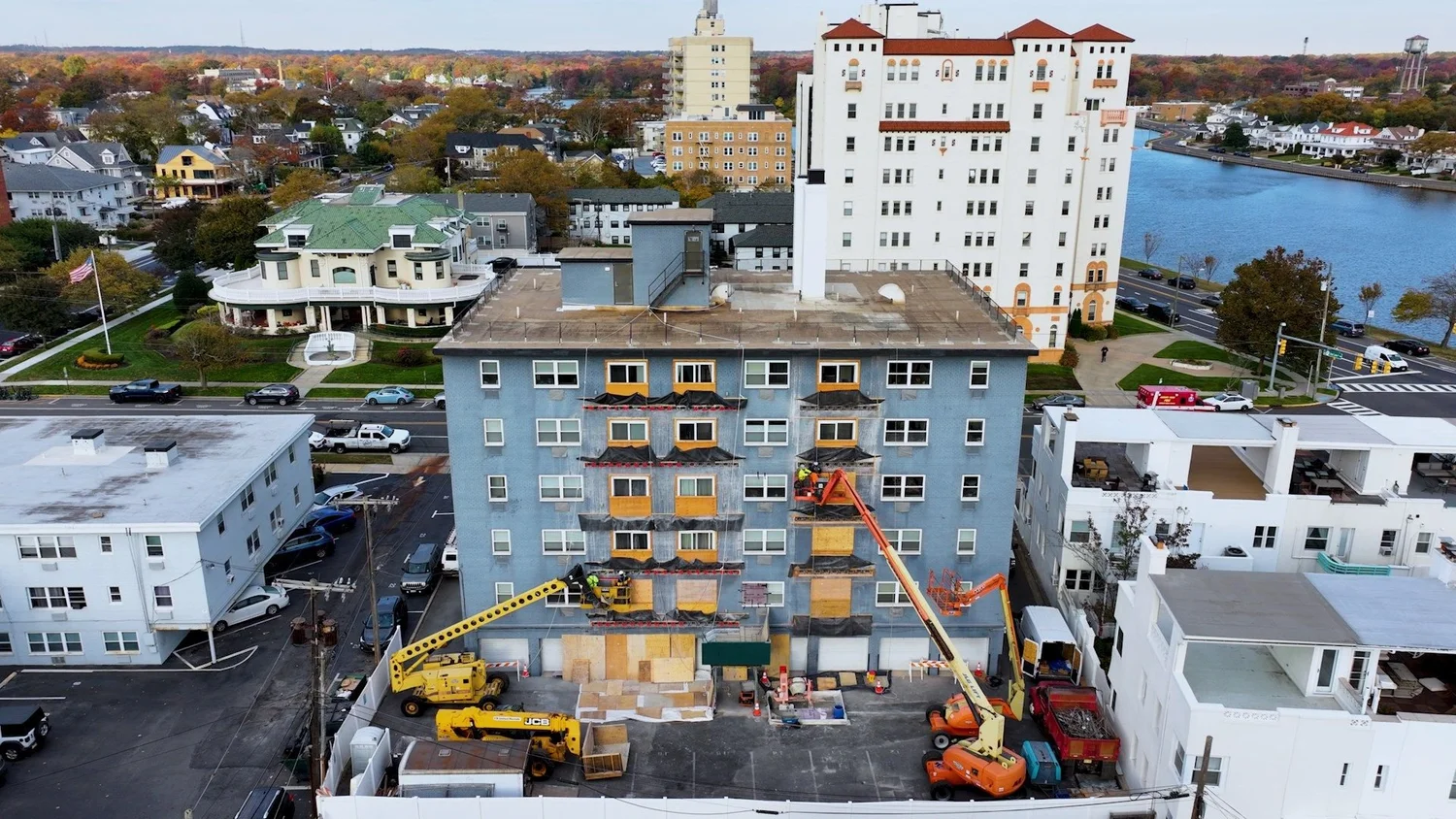
The real move is a library, not a one-off. A recap for every notable job lets you match the bid video to the bid: healthcare to healthcare, restoration to restoration. The Project Recap we made for TG Basile, a masonry, concrete and restoration contractor, shows the format. Recaps are the backbone of our construction video production for builders and developers, and if you want to start capturing footage now for a recap later, use our phase-by-phase shot plan for construction progress videos.
Client testimonials: let owners and architects do the talking
Your clients say it better than any ad. A testimonial is 45 to 90 seconds of an owner, architect or partner on camera explaining what it was like to build with you. It’s the only video in the lineup where someone else does the selling, and an owner who’s stoked about how the job went is the best salesperson you’ll ever have.
Who to put on camera
- Owners and developers who would hire you again.
- Architects and engineers, because other architects and engineers listen to them.
- The GC, if you’re a sub. A GC vouching for you on camera reaches other GCs.
What to ask
- What was the project, and what was riding on it?
- What worried you going in?
- What happened when something went sideways?
- What would you tell another owner thinking about hiring this team?
Skip “Why did you choose us?” It gets you a brochure answer. The sideways question gets you the story. Film it at the finished project, not in a conference room, and get a signed release before it goes public. That’s not legal advice; have your attorney sign off on the release language.
The brand feature: who you are in two to three minutes
This is the construction company video for your homepage, your About page and the top of every capabilities deck. Two to three minutes on who you are, how you work and why your people stay. We deliver it with four 30-second reels cut from the same shoot, enough to post one a week for a month.
What goes in it:
- The owner or founder on why the company exists, in their own words, not off a script.
- Project managers and supers on how a job actually runs.
- Crews doing the work, not posing next to it.
- Drone and ground footage from a few active sites, so it reads like a company and not a single job.
Capability and service videos: sell one thing at a time
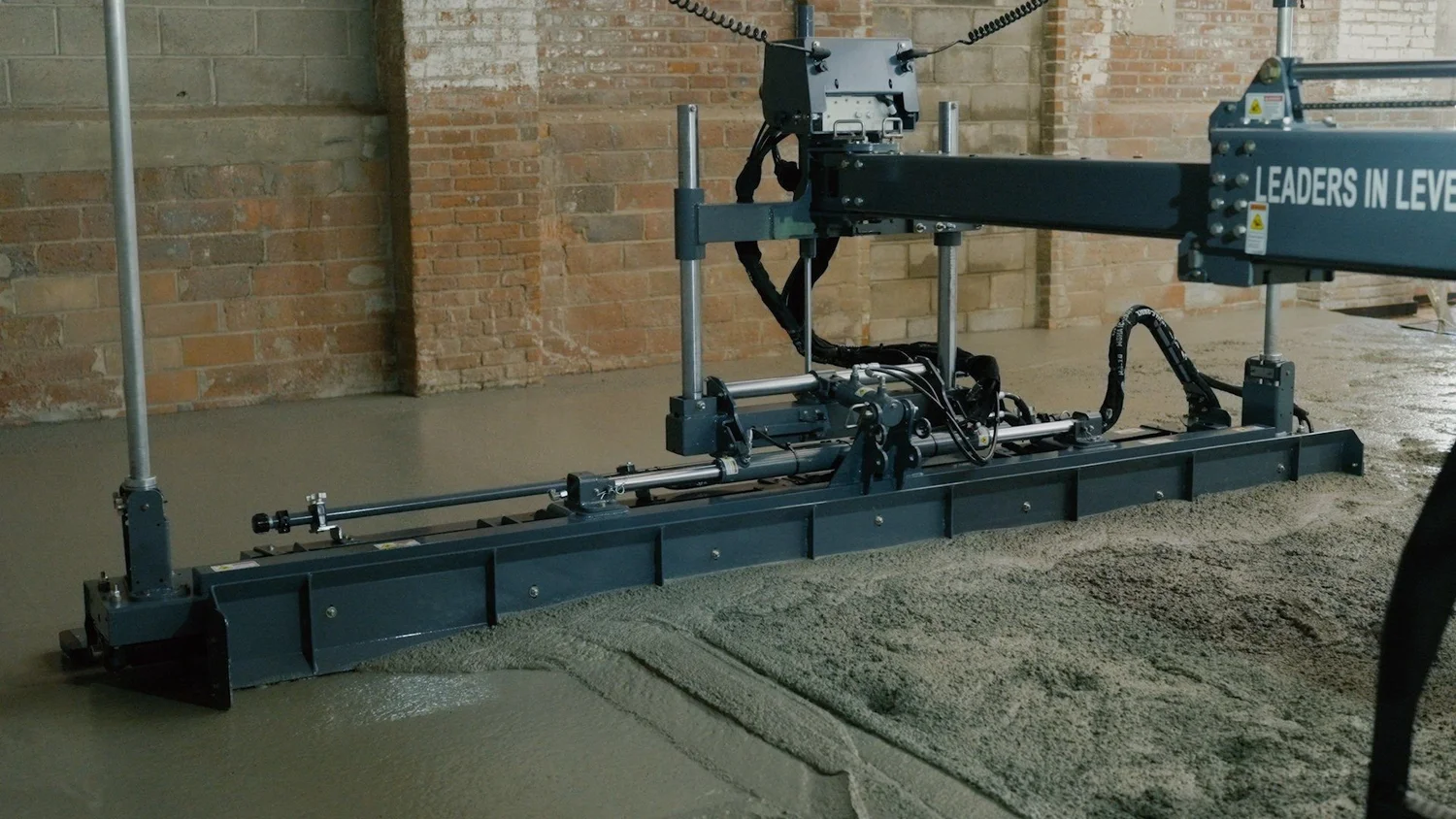
Specialty contractors have a problem most GCs don’t: plenty of buyers don’t fully understand what you do. A service video fixes that. One service, one film, shown start to finish so an owner, engineer or GC understands the method, the equipment and why it’s the right call for their site.
The Hollow Bar Drilling service video we made for Shore Systems Group is a good example of the format. What to film for your own:
- The problem the service solves, on a real site.
- The equipment up close, then at work.
- The process in order, with captions naming each step.
- The finished result, and someone from your team explaining what it means for the project.
Give every service its own page on your website and put its video at the top. A buyer searching for that exact method lands on a page that shows it working.
Recruiting shorts: win the crew, not just the bid
Winning the bid is half the job. You still have to staff it. The construction industry “needs to attract an estimated 349,000 net new workers in 2026,” according to ABC, 2026.
A construction recruiting video doesn’t have to be a big production. It has to be real. Think 30-second vertical shorts that show the trade the way the people in it see it:
- A day in the life of an apprentice or first-year laborer.
- A foreman on why people stay.
- A skill up close: laying block, running a screed, reading a set of plans.
- The things job posts leave out: the training, the path up, the crew itself.
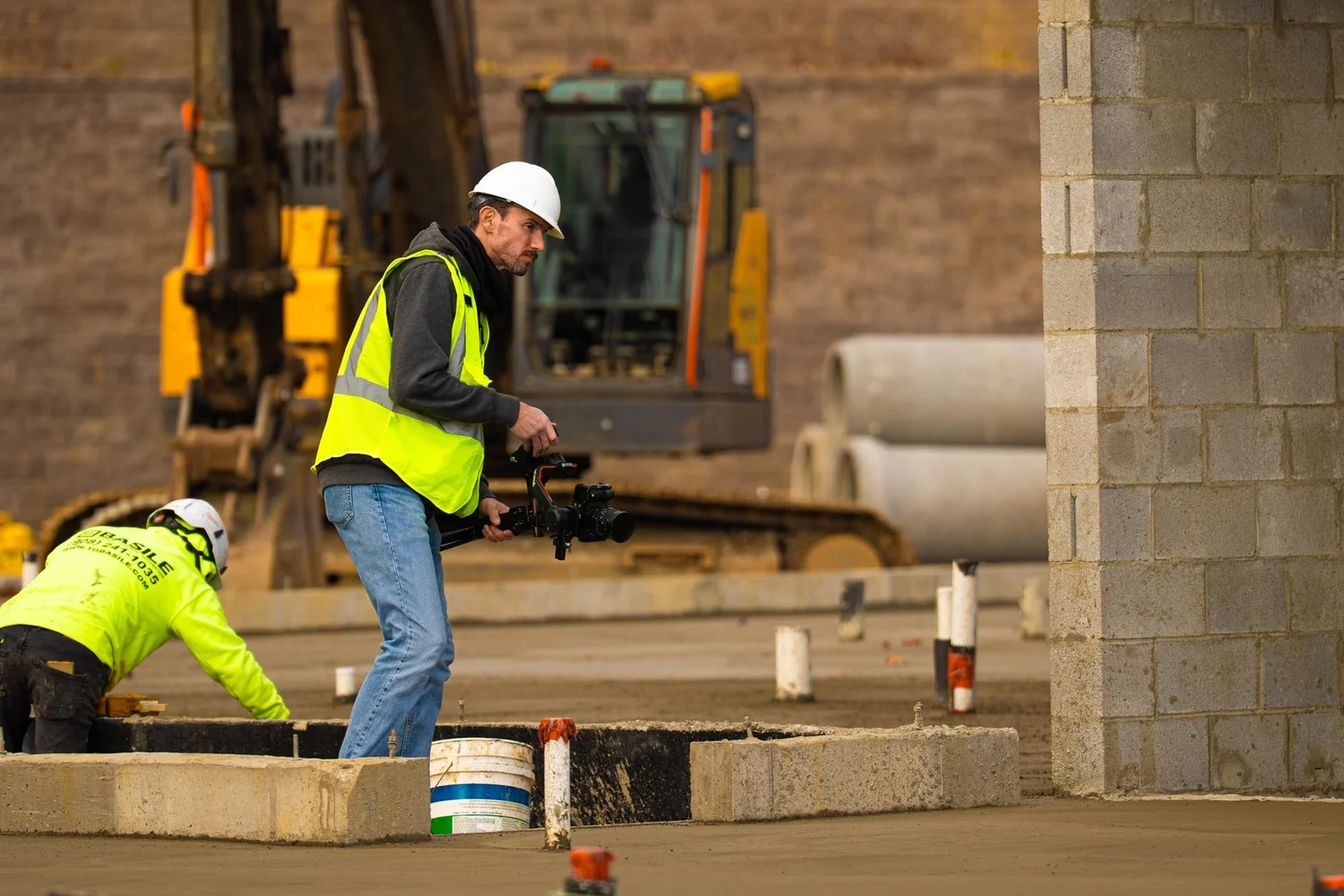
Put the person who does the work on camera. Nobody signs up because of a guy in a spotless hard hat reading a script. Post the shorts where candidates scroll, pin them to your careers page and attach them to job posts. You won’t be alone: in the same AGC survey, 49% added or increased online recruiting such as social media and targeted digital ads (AGC, 2026).
Where to put construction marketing videos so owners see them
A great video sitting on a hard drive does nothing. Put each one where decisions get made:
- Bid packages: a short link or QR code beside each relevant project in your qualifications. Use a video host that tells you when it’s been watched.
- Shortlist interviews: open with the recap or the brand feature. It sets the tone before anyone talks.
- Website service pages: a service video on every service page, a recap on every project page, the brand feature on the homepage.
- LinkedIn: post recaps and highlights from the company page, then have your leadership share them to their own networks.
- Email to GCs and owners: a recap in the follow-up after a pre-bid meeting beats “just checking in.”
- Trade shows: loop the brand feature and recaps at the booth. Captions matter here, because nobody can hear anything over the floor.
How to tell if it’s working
Views are nice. Signed contracts are the point. Track what connects to revenue:
- Shortlist and win rates on bids that included video, versus bids that didn’t.
- Watch data on the links in your bid packages. If the owner’s team watched to the end, you’ll know.
- Inquiries that mention a video. Add a “How did you hear about us?” field to your contact form.
- Time on service pages before and after the video goes up.
- Applications per job post, with and without a recruiting short attached.
Give it a few bid cycles before you judge it. Construction sales cycles are long, and one lost bid tells you nothing on its own. What you’re building is a library that makes every proposal stronger than the last one.
Construction marketing video FAQ
What types of videos should a construction company make?
Start with a Project Recap of your best recent job, then add client testimonials, a brand feature for your website, a service video for each specialty and recruiting shorts. The recaps and testimonials support bids, the brand feature and service videos support your website, and the shorts support hiring.
How long should a construction marketing video be?
Match the length to the job: up to 90 seconds for a project recap, 45 to 90 seconds for a testimonial, 2 to 3 minutes for a brand feature and about 30 seconds for social and recruiting clips. Wistia’s 2026 State of Video found shorter videos see higher engagement, so save the long cut for people who already care (Wistia, 2026).
How much does a construction marketing video cost?
It depends on scope: which videos, how many shoot days, how many sites and how much you need cut from the footage. Tell us about the project and we’ll quote it. I reply within one business day and put together a clear quote built around the job.
Should contractors include video in bid packages?
Yes, when the video matches the bid. Link a recap of a similar project next to its project sheet in your qualifications, use a host that shows you whether it was watched and keep it short enough to finish. A recap of the wrong kind of job is just noise.
Do recruiting videos help construction companies hire?
They give candidates a real look at the work, the crew and the company before they apply, which a text-only job post can’t. Keep them short, vertical and honest, with real crew members on camera. Then track applications per post to see whether they’re pulling their weight.