Construction drone video in New Jersey: rules, airspace and shots that sell
Construction & Development·10 min read
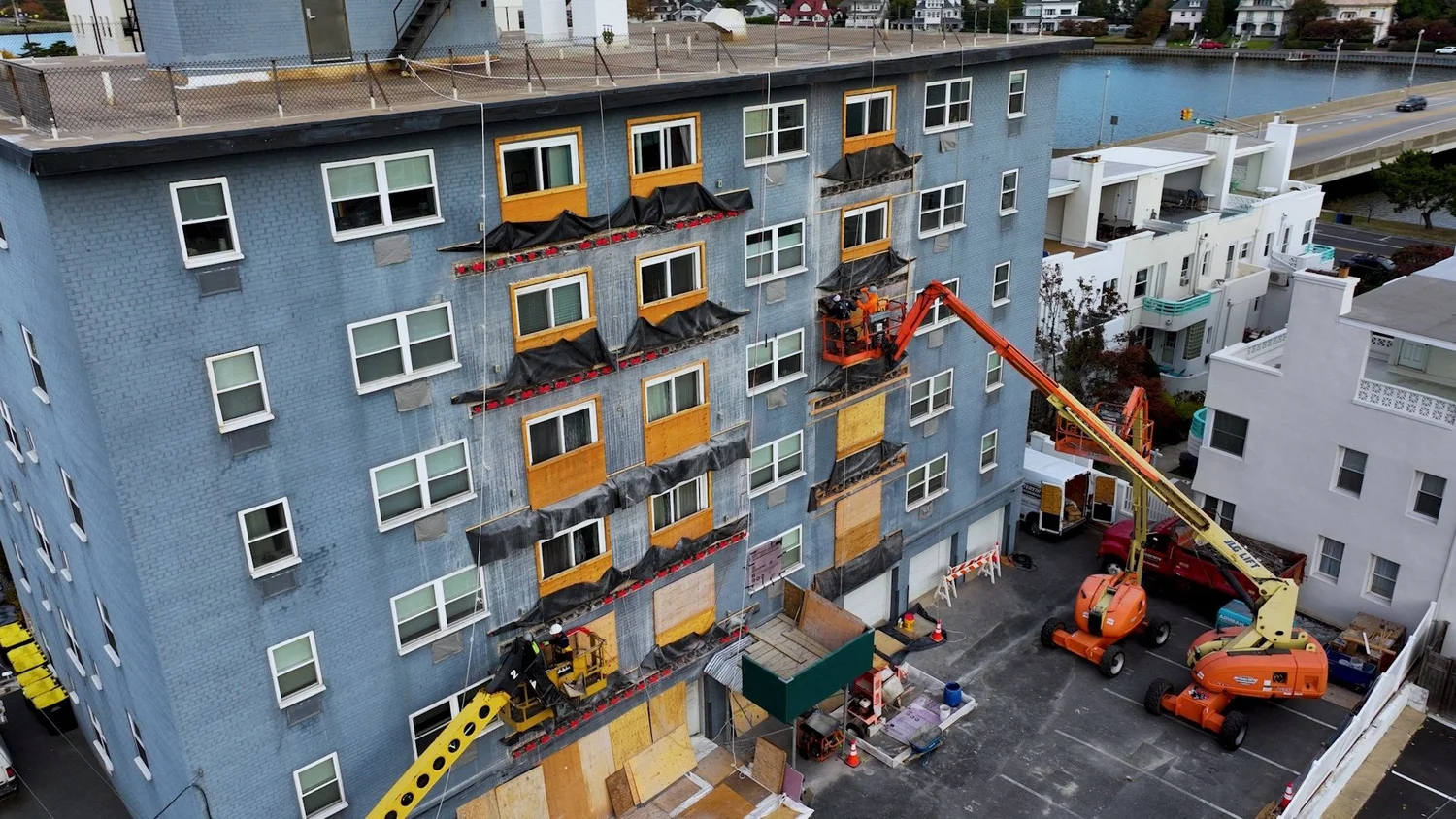
A drone over your jobsite is three things at once: a camera move, an FAA operation and a safety event. Most people plan the first one and wing the other two. Here’s what a GC or developer needs to know before any construction drone video gets shot over a New Jersey site, plus the shots worth putting in the air.
Who’s allowed to fly your site
Drones on jobsites stopped being a novelty a while ago.
The question is who’s holding the controller. Part 107 of the FAA’s rules requires a remote pilot certificate for the person flying (eCFR, 2026). Not somebody’s nephew who’s “pretty good with it.” A certified Part 107 drone pilot, and you see the certificate before anyone unpacks a battery.
The rules are the same for construction drone photography in New Jersey as for video. Then ask two more questions: can I see your certificate of insurance, and how will you check the airspace for this address? A pro answers both without blinking.
I’m an FAA Part 107 certified pilot and OSHA-30 certified, so I look at your site from both ends: what the aircraft is allowed to do, and what your safety plan expects from anyone walking around with a camera.
The flight rules that shape every shot
Quick note: this is a plain-English summary, not legal advice. Rules and airspace change, so confirm airspace for every site on the FAA’s UAS Facility Maps and LAANC before anyone flies.
The 400-foot ceiling and the structure exception
Section 107.51 caps a drone at 400 feet above ground level, unless it stays within a 400-foot radius of a structure and no higher than 400 feet above the structure’s top (eCFR, 2026). Most mid-rise work never gets close. The exception matters on towers, and it doesn’t cancel the airspace rules below.
Visual line of sight
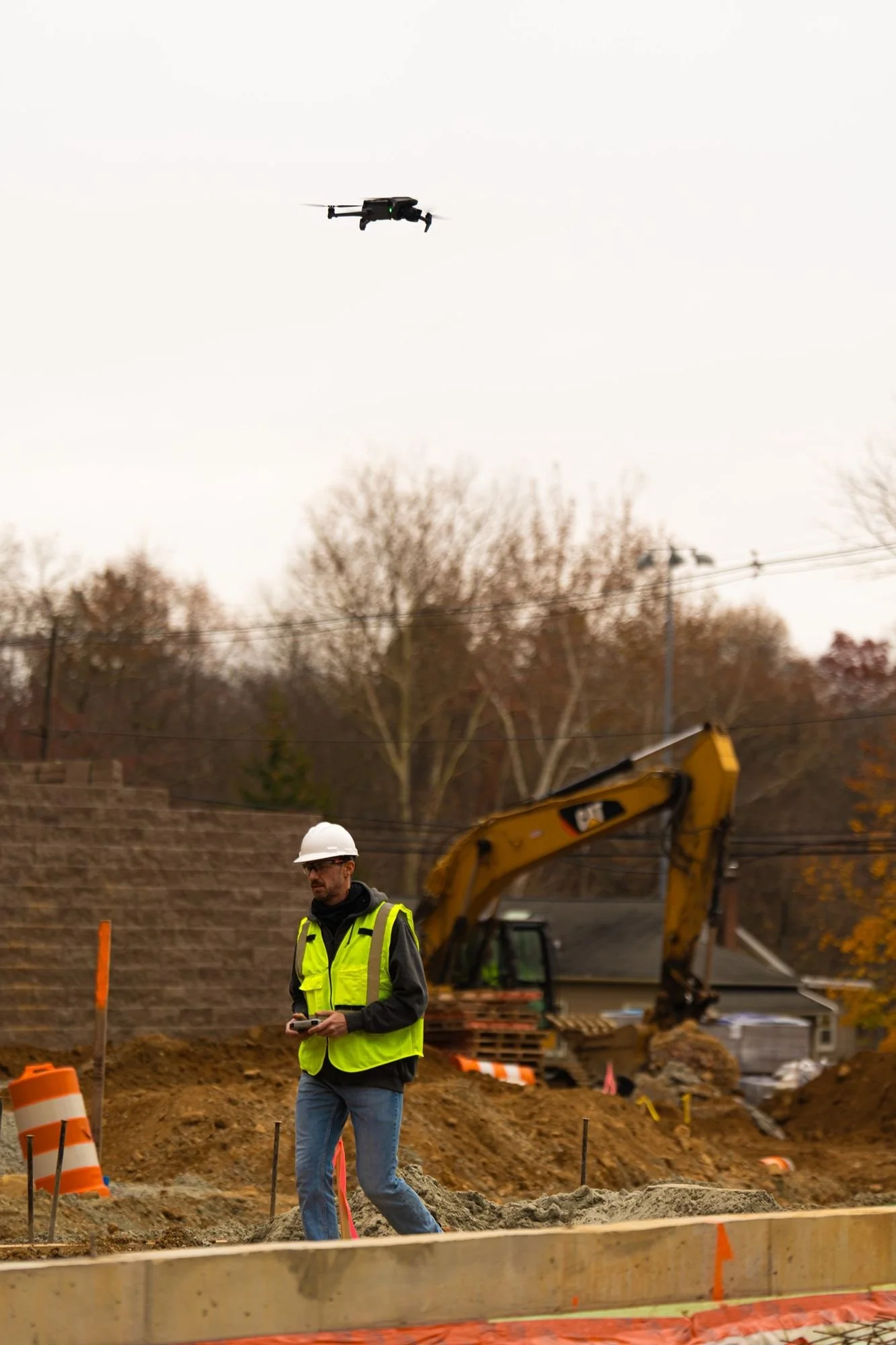
Section 107.31 requires the drone to stay within visual line of sight (eCFR, 2026). On a jobsite that’s a real constraint, because the building you’re filming blocks the view. You can’t stand at the trailer and fly around the back of the core. We move the launch point instead. It takes a few minutes and saves the shot.
Night shots
A lit building after dark looks killer from the air. Section 107.29 allows night operations only when the pilot has completed the updated test or training and the drone carries anti-collision lighting visible for 3 statute miles (eCFR, 2026). Ask about both before you plan the after-dark shot.
Remote ID
Remote ID has been required for drones flown after September 16, 2023, and FAA enforcement began March 16, 2024 (FAA, 2026). It’s a one-line question. Ask it.
Controlled airspace near Newark and Teterboro
This is the part that trips people up in North Jersey. Section 107.41 bars flights in Class B, C or D airspace, or in the surface area of Class E airspace, without authorization from air traffic control (eCFR, 2026).
Close to home, the New York Class B airspace is built around JFK, LaGuardia and Newark Liberty (Federal Register, 2026). Teterboro has its own Class D, running from the surface to 2,500 feet MSL within 4.2 miles of the airport (Federal Register, 2026). Both come from 2026 Federal Register documents. Airspace changes, so the site you flew last year gets checked again.
How to check a site properly:
- Look up the address on the FAA’s UAS Facility Maps. Each grid shows the maximum altitude the FAA may authorize there, and the maps don’t authorize anything on their own (FAA, 2026).
- If the site sits in controlled airspace, request authorization through LAANC. It provides near-real-time authorization at or below 400 feet in controlled airspace and is available at 726 airports (FAA, 2026).
- If the shot needs more altitude than the grid shows, change the shot. Don’t build a hero move around a number the FAA hasn’t said it will authorize.
- File the authorization with the day’s paperwork.
And don’t assume a site is clear because it’s nowhere near Newark. Check the address. Every site, every time.
Flying over crews: why it matters on a jobsite
An empty house has nobody on it. Your site has a crew on the deck, a mason on the scaffold and a driver backing a truck in.
Section 107.39 allows flight over people only when they’re directly participating in the operation, under a covered structure or inside a stationary vehicle, or when the flight meets the operations-over-people rules in Subpart D. Those rules sort drones into four categories. Category 1 is limited to aircraft of 0.55 pounds or less. Category 3 allows flight over people at a closed or restricted-access site only if everyone there has been put on notice (FAA, 2026).
Here’s the practical read. A carpenter framing walls is part of your project, not part of the flight. So we plan flight paths around people: orbits that clear the deck, facade passes timed for when the swing stage is down, top-downs grabbed early before the crew spreads out. That early slot also happens to have the best light of the day. Funny how that works.
A carpenter framing walls is part of your project, not part of the flight.
Then put the drone in the morning safety briefing: where it will fly, where it will land, who’s flying it. We work around your crews, your safety briefings and your timelines, not through them.
New Jersey drone law and insurance
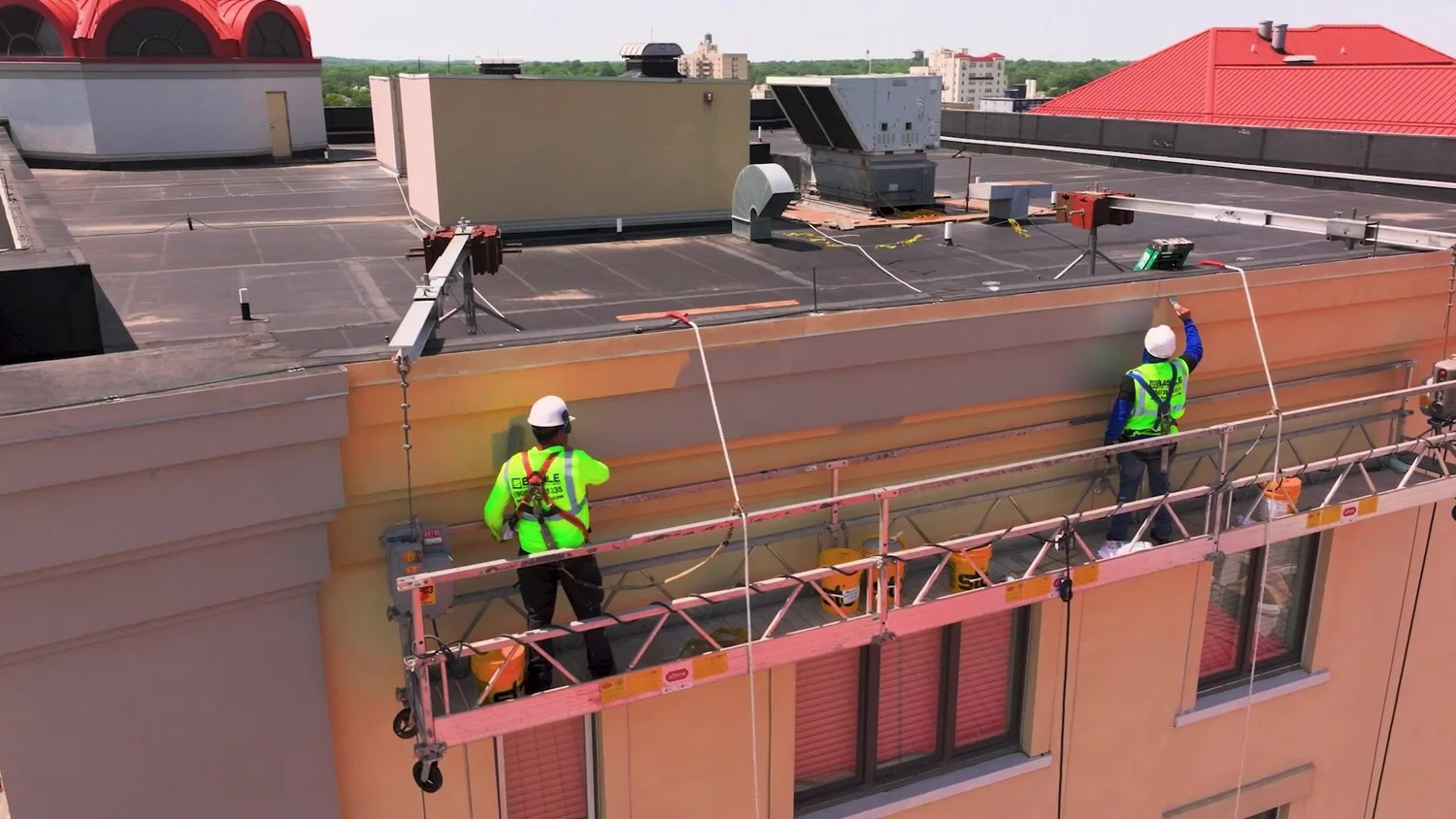
Federal rules aren’t the only rules. New Jersey’s drone law, P.L.2017, c.315, makes operating a drone “in a manner that endangers the life or property of another” a disorderly persons offense, and interfering with first responders a fourth-degree crime. It also preempts local drone ordinances that are inconsistent with it (NJ Legislature, 2017).
Read that first clause with a jobsite in mind: hoist lines, crane picks, a neighbor’s roof, the public sidewalk. A careless flight there is more than bad footage.
Then insurance. The FAA doesn’t require drone insurance, but many customers only hire insured pilots (Flying Magazine, 2025). Be one of those customers. Ask for a certificate of insurance before the first flight and check it against what your contract with the owner requires. If the pilot can’t produce one, you have your answer.
Construction drone video shots that sell
Rules handled. Now the fun part: the construction aerial video shots I plan on almost every job.
The orbit reveal
Start low behind something: a fence line, a stack of block, the crane mats. Rise and swing around until the whole build fills the frame. It says scale before anyone says a word, which is why it’s the opener I reach for first. Plan the radius so the path never crosses the deck.
Top-down progress
Camera pointed straight down, same height, same spot. One frame means little. A year of them cut together is a flipbook of your build that an owner will watch start to finish.
Site context and access roads
Pull back until you see what surrounds the site: the highway, the access roads, the neighbors, the water. Owners, lenders and towns care about this more than any facade detail. A 2022 NAR Commercial Connections piece put it plainly: aerial images “offer much more insight into a property than ground views and maps” (NAR, 2022). Developers get extra mileage here; see how developers use video with investors, towns and tenants.
Facade passes
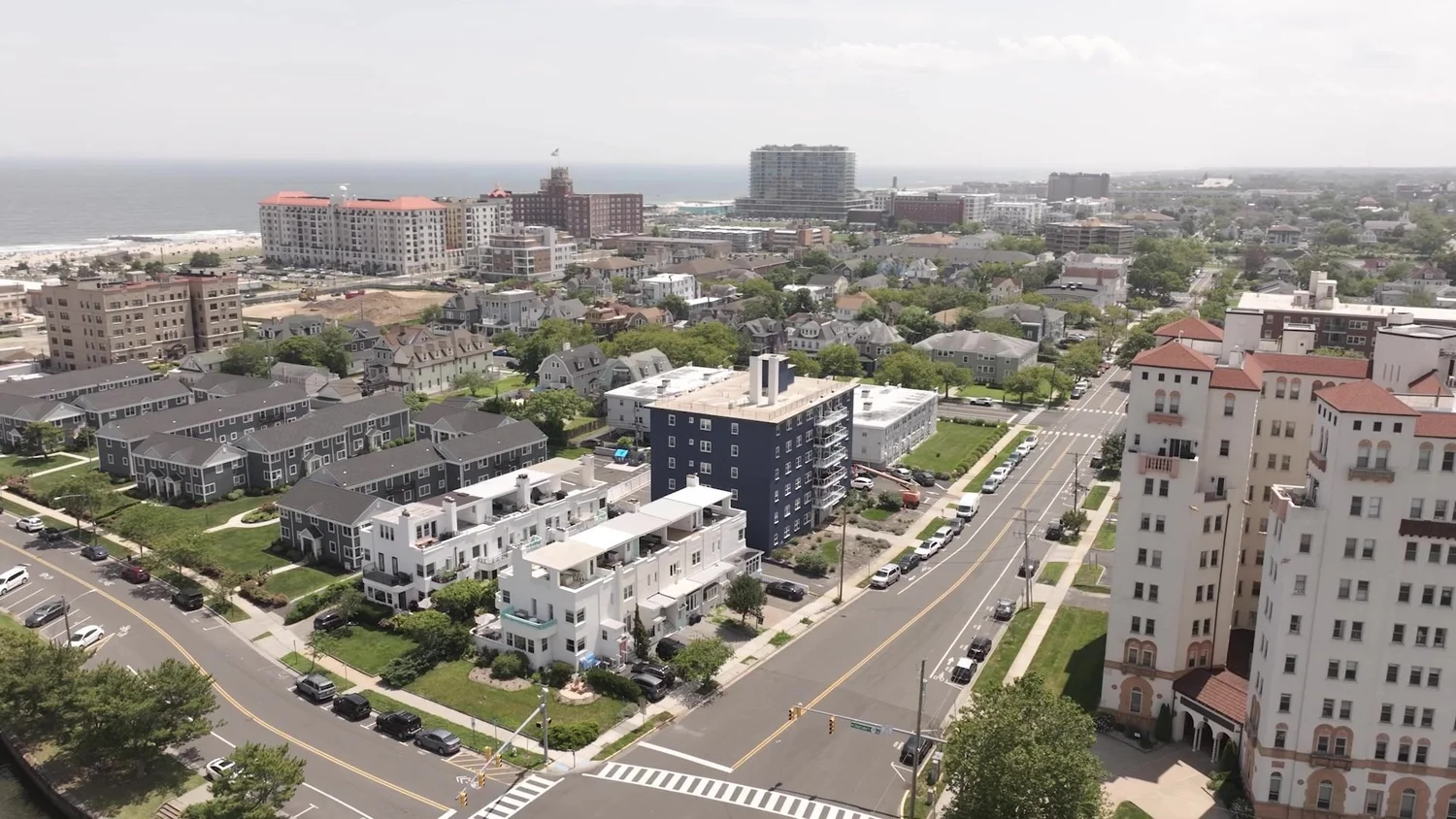
A slow lateral move along one elevation at working height shows craft and scale at once: new brick, restored stone, a curtain wall going in. Keep a real standoff from lifts and swing stages. Never ask a pilot to thread the needle for a cooler frame.
Before/after from the same GPS point
On the first flight, save the exact position: coordinates, altitude, heading and camera angle. Fly back to it every month. At the end you cut from dirt to done in one wipe, and you own a dated visual record of every month in between.
Pair it with ground footage
A recap that’s all drone looks like a real estate listing. The air gives you scale; the ground gives you people, hands and craft. We plan both together, and for the ground side, here’s what to film from groundbreaking to ribbon-cutting. Drone, captions and licensed music come with every construction video we make, so you’re never choosing between air and ground.
The site super’s preflight checklist
Print it. Tape it inside the trailer door. Walk it with the pilot before the first flight.
- Credentials: Part 107 remote pilot certificate seen, certificate of insurance on file.
- Airspace: Site address checked on the UAS Facility Maps, with LAANC authorization saved if the site is in controlled airspace.
- Remote ID: Pilot confirms the aircraft is Remote ID compliant.
- Safety briefing: Drone covered in the morning briefing, including where it will fly, where it will land and who’s flying.
- No-fly areas: Occupied decks, crane picks, the public sidewalk and neighboring properties marked on the site plan, with crane and lift schedules shared.
- Launch points: Flat, clear spots away from traffic and overhead lines, placed so the pilot keeps the drone in sight around the structure.
- Stop authority: One person on site who can call off the flight, reachable by phone or radio.
- Weather call: Go/no-go time and a backup date agreed the day before.
Construction drone video FAQ
Do you need a license to fly a drone over a construction site in NJ?
For commercial work, the person flying needs an FAA remote pilot certificate under Part 107 (eCFR, 2026). New Jersey’s drone law also makes it a disorderly persons offense to operate a drone “in a manner that endangers the life or property of another” (NJ Legislature, 2017). Ask to see the certificate and a certificate of insurance before the first flight.
Can you fly a drone near Newark or Teterboro airport?
Not without authorization from air traffic control. Part 107 bars flights in Class B, C or D airspace, or the surface area of Class E, without it (eCFR, 2026). The New York Class B is built around JFK, LaGuardia and Newark Liberty (Federal Register, 2026), and Teterboro has its own Class D (Federal Register, 2026). Check the exact site on the FAA’s UAS Facility Maps and request LAANC authorization where it applies.
How high can a drone fly over a construction site?
Part 107 caps drones at 400 feet above ground level, unless the drone stays within a 400-foot radius of a structure and no higher than 400 feet above its top (eCFR, 2026). In controlled airspace, the altitude the FAA may authorize can be lower, so check the site on the UAS Facility Maps first (FAA, 2026).
Can a drone fly over workers on a jobsite?
Only in limited cases. Part 107 allows flight over people who are directly participating in the operation, under cover or in a stationary vehicle, or under the FAA’s operations-over-people categories; Category 3 allows it at a closed or restricted-access site only if everyone there is on notice (FAA, 2026). The practical plan is to route flights around crews and cover the drone in the safety briefing.
Does a drone pilot need insurance to film my site?
The FAA doesn’t require drone insurance, but many customers only hire insured pilots (Flying Magazine, 2025). Ask for a certificate of insurance before the first flight and check it against what your contract with the owner requires. No certificate, no flight.
Sources
- eCFR, 14 CFR Part 107: Small Unmanned Aircraft Systems (accessed 2026)
- FAA, Operations over people (accessed 2026)
- FAA, Remote ID (accessed 2026)
- FAA, LAANC (accessed 2026)
- FAA, UAS Facility Maps (accessed 2026)
- Federal Register, Amendment of Class B airspace; New York, NY, 2026
- Federal Register, Amendment of Class D airspace; Teterboro, NJ, 2026
- New Jersey Legislature, P.L.2017, c.315, 2017
- Flying Magazine, drone insurance guide, 2025
- Dodge Data & Analytics, contractor technology research, 2020
- NAR Commercial Connections, Drone tech gives lift to land projects, 2022