How to plan a country club anniversary film members will watch for decades
Private Clubs·9 min read
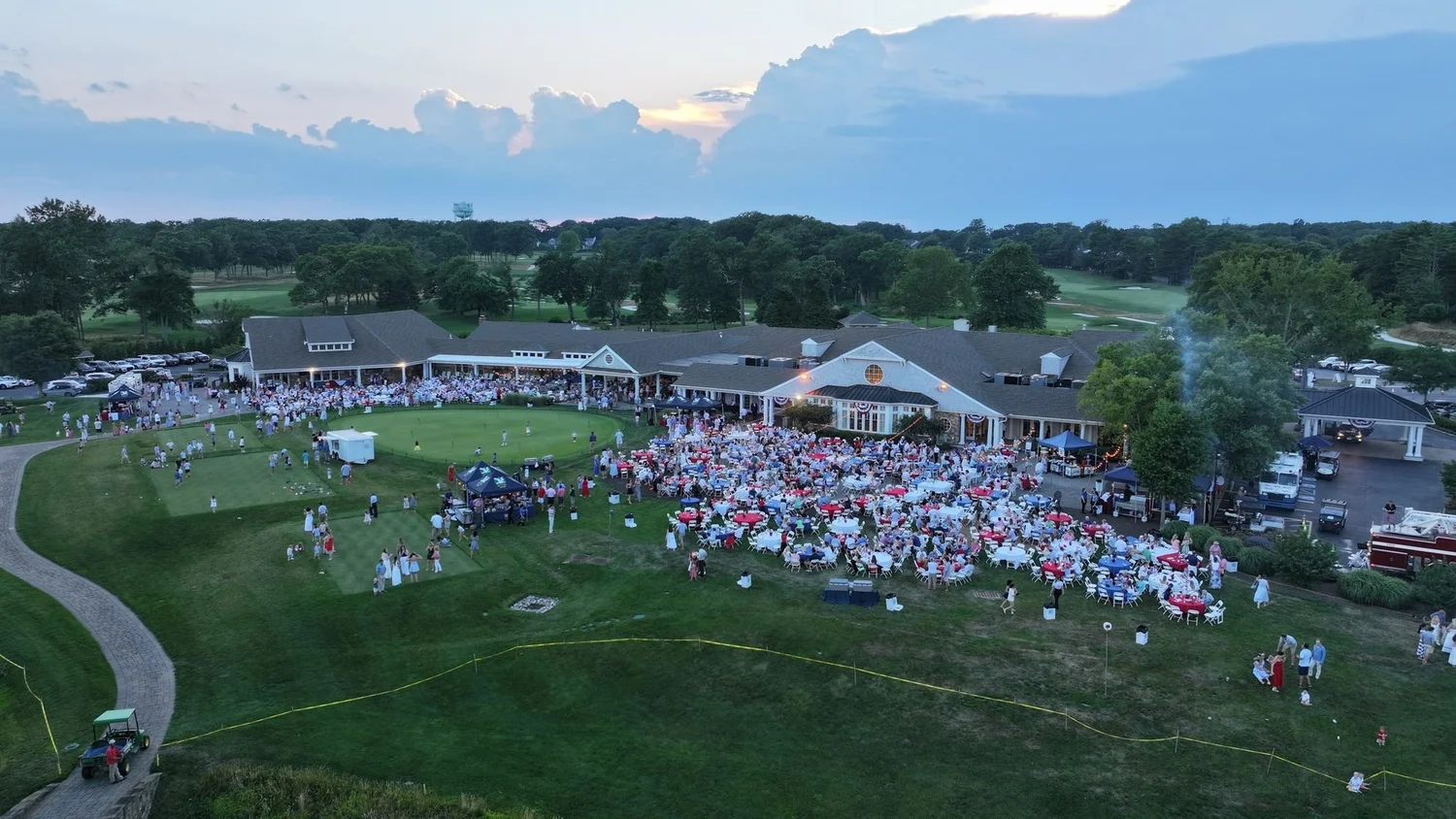
Somewhere in your club office there’s probably a slideshow from the last milestone that nobody has opened since the gala. A country club anniversary film should work the other way: members send it to their kids, new members watch it before their first round, and it’s still playing when the next milestone comes around. Here’s how I’d plan one for a 50th, 75th, 100th or 125th, working back from premiere night.
Why a country club anniversary film outlasts the slideshow
Nothing against the coffee-table book. Clubs should make one, and the good ones become heirlooms. But a book lives on a shelf, and a slideshow plays once, for whoever happened to be in the room. A film does three things neither can do alone:
- It lasts. Voices, faces and the sound of the place, captured while the people who remember are still here to tell it.
- Members share it: with grown kids, old playing partners who moved away, the friend thinking about joining.
- It becomes the new-member welcome. A family that joined last spring gets, in a few minutes, what took everyone else years to absorb.
A slideshow plays once, at the gala. A film keeps working every time a new member walks through the door.
That last point matters more than it used to. Plenty of the people in your grill room may not know the story yet.
The McMahon Group put it well: members enjoy “facilities, traditions, reputations, and cultures that are often shaped by decisions made long before they joined” (McMahon Group, 2026). A club history documentary explains those decisions and credits the people who made them. That’s the thinking behind our documentary films for golf and country clubs.
Start with a date and a small committee
Work back from premiere night
Pick the premiere first: the anniversary gala, founders’ day, the dinner where the whole club will be in one room. Then book your production team 3–4 months ahead of it. We build every schedule back from the premiere date, so nobody is scrambling the week before.
One wrinkle clubs forget: the course has seasons. A spring premiere may mean shooting the course the fall before, so book earlier than you think. Then work in this order:
- At booking: lock the premiere date, the committee and who has final sign-off.
- Before the cameras: a story call, the archive dig, the on-camera list and outreach.
- The shoot: two interview days, then a day for the course, clubhouse and drone.
- The edit: a first cut, then review rounds with the committee.
- Premiere week: final files and a tech check in the room.
Keep the committee small
A big anniversary committee is great for planning a gala and rough on a film edit. Pull out a small working group: a board liaison who can make decisions, the GM or communications director who owns the calendar, a historian who knows which stories have grown with each telling, and whoever knows where the photos are. Every club has that person. Find them early. Then name one person as the final voice on edits.
Choose who tells the story
This is the part clubs get nervous about, and it’s where the film is won. The instinct is to put the club president in front of a camera to read the history. Resist it. The strongest version is told by the people who lived it, in their own words. For a golf club centennial or any other milestone, I’d draw from five groups:
- Founding families, who carry the stories nobody wrote down.
- Longtime staff: the locker room attendant, the bartender, the starter. They see the club from angles members never do.
- The golf professional, current or retired, on how the game at your club has changed.
- The superintendent, on the land itself and what it takes at dawn to get it ready.
- Newer members, who remember walking in for the first time. They’re the audience this film will serve for years.
Fewer voices, told well, beat a roll call. Some people belong in the credits or the premiere toast instead.
What we need from the club at this stage: choose who’s on camera, reach out to them personally and help lock the shoot dates. An invitation from the GM or the board carries weight a production company’s email never will. For the privacy side, see our guide to filming at a private club with discretion.
Open the archives early
Archival material is what makes a club history documentary feel like history instead of a promo. It’s also the slowest thing to gather, so start the week you book.
- Photos: opening day, early tournaments, the clubhouse before and after renovations.
- Board minutes: founding votes and big decisions, often with a line worth reading aloud.
- Scorecards: old cards show how the course and its yardages changed.
- Old film and tapes: home movies, reels, VHS from a past anniversary. Get them to a transfer lab early.
- Trophies and honor boards: names in gold leaf film beautifully, and they’re already on the walls.
Scan photos properly rather than snapping them with a phone, and note the year and names on each while the people who know are still around. Ask members, not just the office: some of the best photos a club has are in a shoebox in someone’s closet.
Interviews and shooting days
Questions written person by person
Generic questions get generic answers. We write interview questions for each person on camera, so the superintendent doesn’t get the same questions as the founder’s granddaughter. A few I like:
- What do you remember about the first time you walked into this clubhouse?
- Who taught you how things are done here?
- What tradition here would an outsider never understand?
- What do you hope this place looks like at the next milestone?
Coach every interview
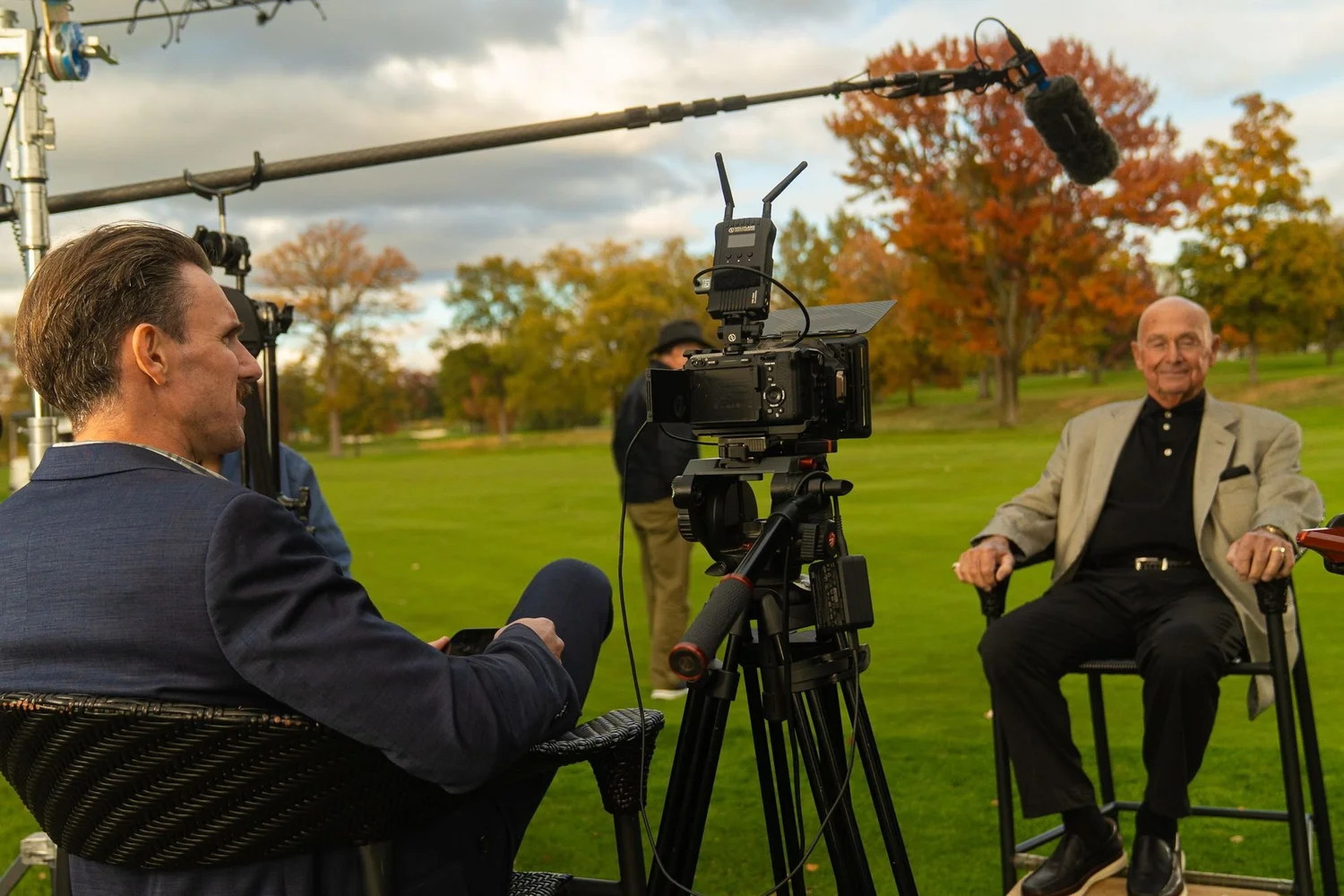
Members don’t need to be comfortable on camera. That’s our job. We coach every interview, and the best stories usually come from the people who swear they have nothing to say. We film in natural settings around the club (the porch, the grill room, the eighteenth green) so it feels like a conversation instead of a deposition.
Two interview days, then a day for the place
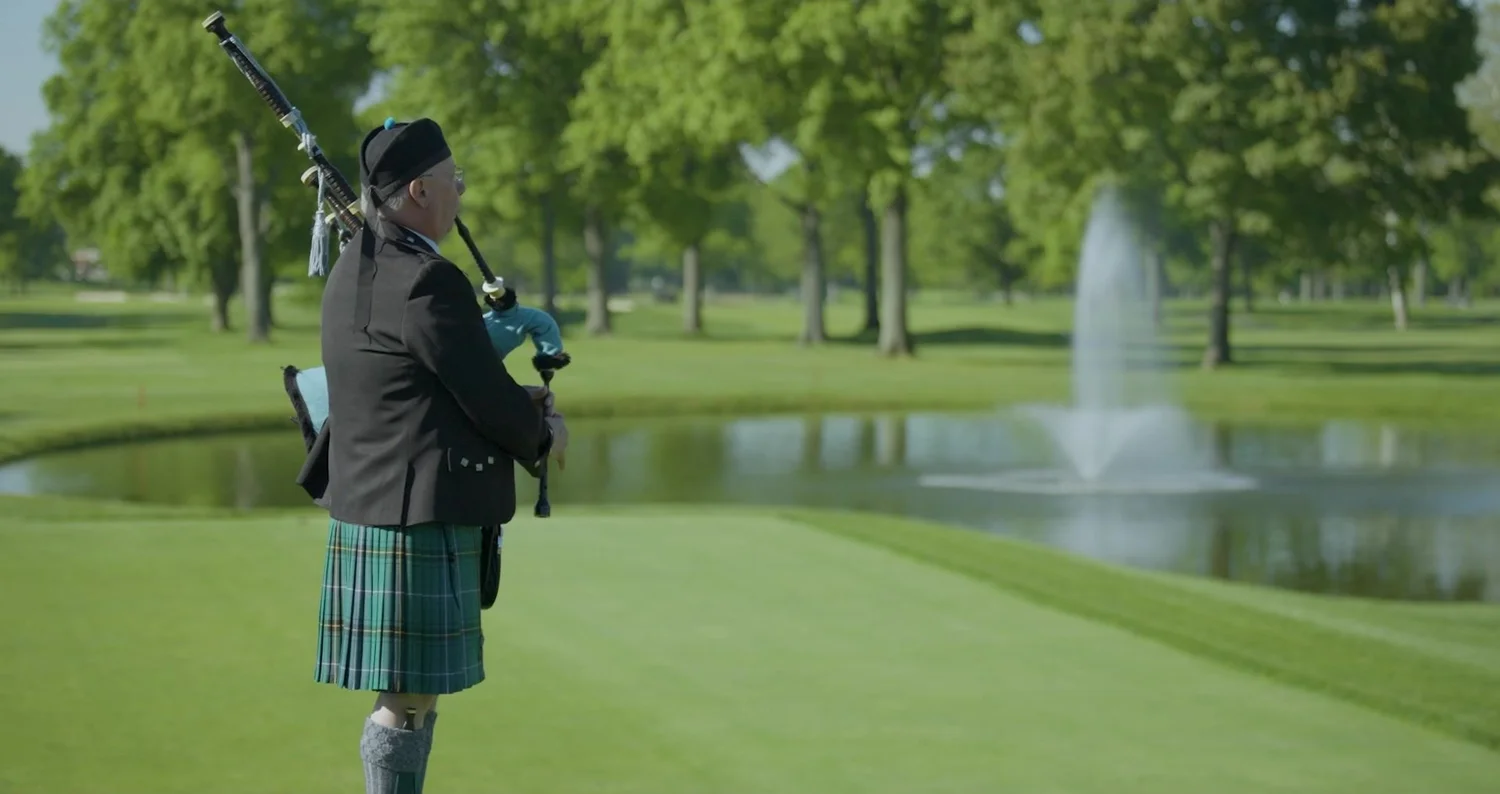
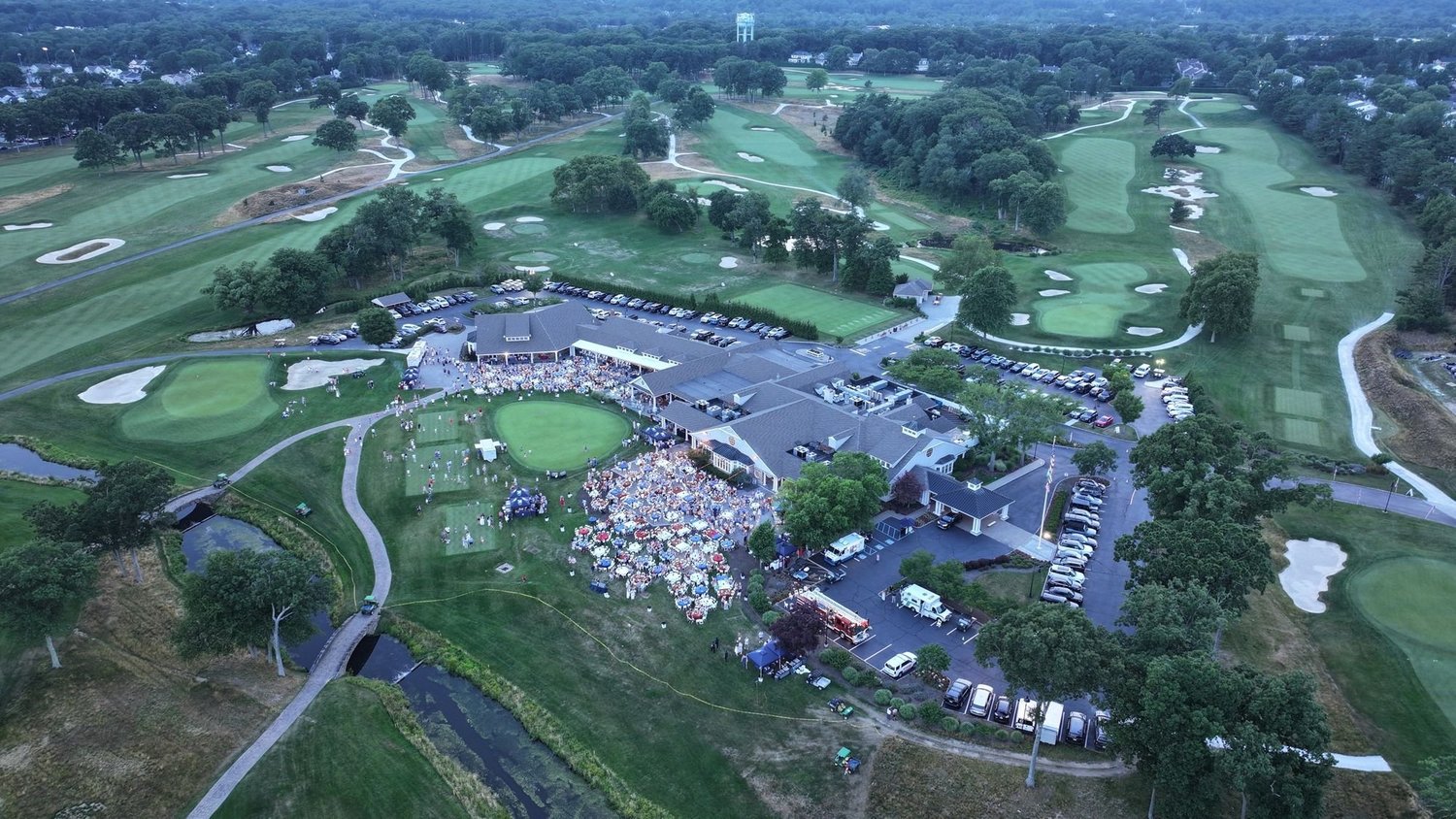
Two interview days with members, staff and board come first. The third day belongs to the course, clubhouse and drone, so it can chase the best light: the first tee at sunrise, the grounds crew at dawn, the honor boards, aerials of the whole property and whatever tradition is yours.
I fly the aerials myself as an FAA Part 107 certified pilot. Whoever flies at your club should check the airspace on the FAA’s UAS Facility Maps, which show the maximum altitudes the FAA may authorize but don’t authorize a flight on their own, and request authorization through LAANC where the course sits in controlled airspace. Not legal advice, just the check I’d ask for.
How to structure a seven-to-ten-minute film
A club anniversary video has to hold a room full of members and still work on a phone months later. Plan for roughly seven to ten minutes. The Prestige Film runs up to ten; “A Legacy on the Green,” our film for Upper Montclair Country Club, runs 6:55 and is told by its members and staff. Watch “A Legacy on the Green” on our work page for the pacing.
- The open: one voice and one image before any title card. A memory, not a history lecture.
- The beginning: the founding, told through archival photos and the founding families. Keep it tight; this section bloats.
- The place: the course and clubhouse, through the superintendent and the pro.
- The people: staff, traditions, the stories that make members laugh and the one that makes the room go quiet.
- The club today: newer members and families, proof the club is alive and not a museum.
- The next chapter: close looking forward, in the voices of the people who’ll carry it.
Leave out the year-by-year timeline read over photos, the list of every past president and the closing speech from the board. The presidents belong in the book.
Premiere night and everything after
Make the premiere an event
- Screen it where the club gathers: the ballroom, or the lawn at dusk.
- Test the room first on the actual screen and speakers. Sound is where screenings go wrong.
- Seat the people in the film up front and introduce them before it rolls.
- Invite founding families, retired staff and past presidents, in the film or not.
- Keep the speeches short. The film is the toast.
An Event Film, a 60–90 second highlight, captures the night for members who missed it.
Where the film lives next
The club decides how its film is shared, and we only share it publicly with the club’s permission. Once you’re ready, put it on the history and membership pages of your website, cut 15–60 second reels for social, play it at new-member orientation and add a Membership Film cut of up to three minutes built for prospects. More on what prospects want to see in a private club membership video.
A 100th anniversary video made this way doesn’t go in a drawer. It becomes how the club introduces itself.
Country club anniversary film FAQs
How far in advance should a club plan an anniversary film?
Book your production team 3–4 months before the premiere and build the schedule backward from that date. If the premiere falls early in the season, book earlier, since course footage looks best when the course is in season. That runway covers story development, two interview days, a course day and review rounds.
How long should a country club anniversary film be?
Plan for roughly seven to ten minutes for the main film. That’s long enough to cover the founding, the course, the people and the club today without losing the room. The Prestige Film runs up to ten minutes, and social reels and a membership cut can come from the same footage.
Who should be interviewed for a club history documentary?
Mix founding families, longtime staff, the golf professional, the superintendent and newer members. Different tenures give the film range, and newer members speak for the people it will serve for years. Keep the list focused, because a few voices told well beat a roll call.
What if our members aren’t comfortable on camera?
They don’t need to be. We write questions for each person, coach every interview and film in natural settings around the club, so it feels like a conversation. The club chooses who’s on camera and reaches out to them, which makes saying yes a lot easier.
How much does a club anniversary video cost?
It depends on scope: how many people you interview, how many shoot days you need, how much archival material there is and which extra cuts you want. Tell us about your milestone and your premiere date. I reply within one business day and put together a clear quote built around your milestone.